What If We Are the Aliens?
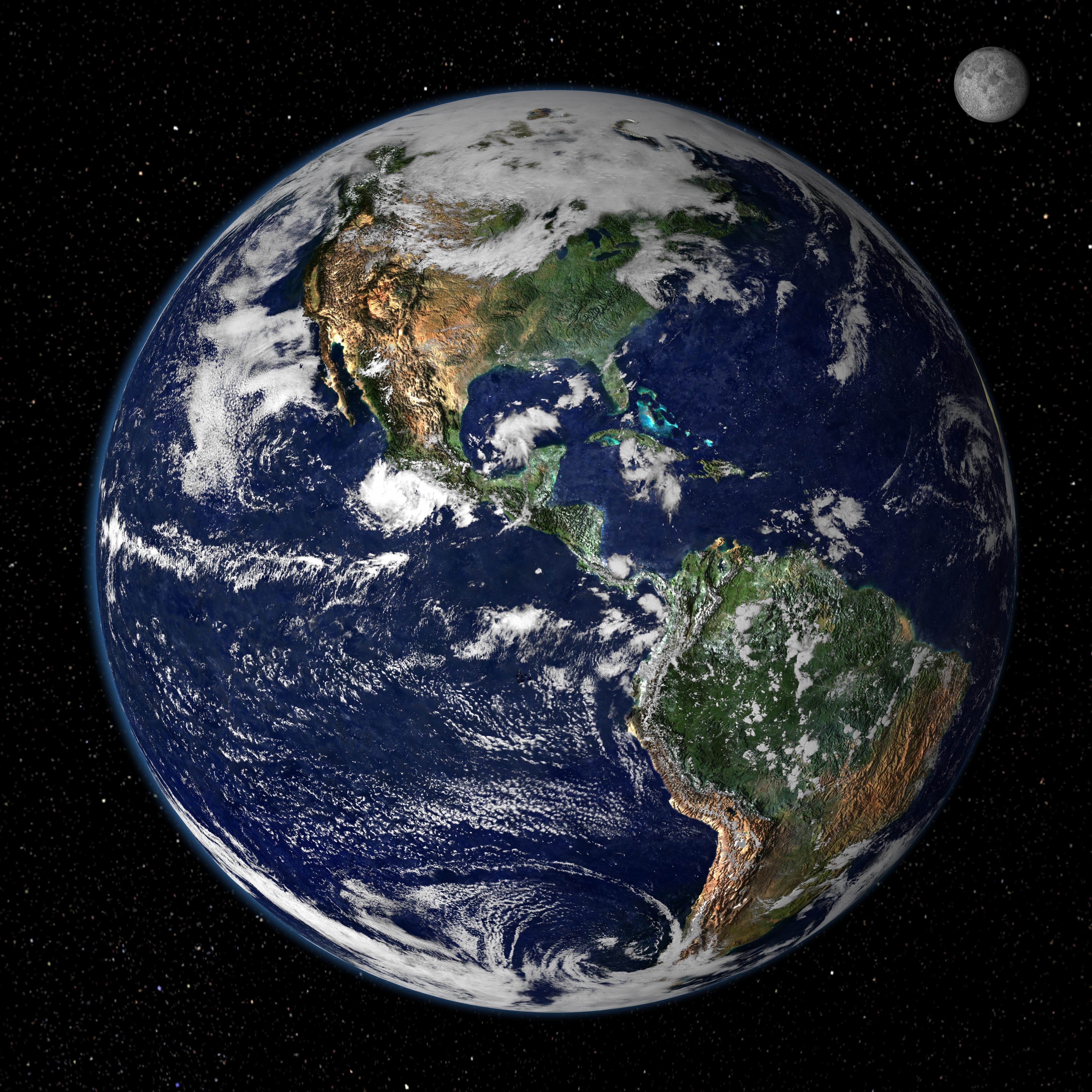
Every species on Earth has spent millions of years becoming exquisitely adapted to its environment.
Fish evolved gills. Birds developed hollow bones. Polar bears grew thick fur.
And then there’s us.
We burn under our own star. Our backs break under our own gravity. Childbirth is extraordinarily difficult. Our immune systems attack harmless pollen and food. We need clothing, shelter, fire, and technology to survive environments that other animals handle with their bodies alone.
And we are the only species we know of that has looked around at its home planet and thought:
Something is wrong.
What if the reason we seem so badly fitted to Earth is because we weren’t originally from here?
It sounds ridiculous.
But some of the clues are surprisingly strange.
The Sun Problem
Take sunlight.
Lizards bask for hours. Horses, elephants, dogs, cats—entire lives spent beneath the same Sun that gives us life.
We, meanwhile, can burn in minutes.
Human skin has sophisticated UV-protection mechanisms—but they are far from perfect. We developed clothing, shade, architecture, and eventually sunscreen to compensate.
Of course, there’s a perfectly good evolutionary explanation. Our ancestors lost much of their body hair, likely to dissipate heat while running and hunting in hot environments. Melanin provides substantial UV protection, and populations under intense sunlight evolved darker skin.
Still, there’s something undeniably strange about an animal that has to manufacture a chemical lotion just to stand safely outside under its own star.
The Back Problem
Then look at your back.
Around 80% of people experience back pain at some point in their lives.
Our spine is an extraordinary piece of biological engineering—but it was never designed from scratch for a creature that walks permanently on two legs.
Our ancestors inherited the basic vertebral architecture of four-legged animals. Evolution then gradually modified it to support an upright body.
The result works.
Mostly.
Our spine curves. Discs compress. Muscles compensate. Nerves get trapped.
Evolution didn’t redesign the machine.
It modified the old one.
The Childbirth Problem
Then there’s childbirth.
Human birth is unusually difficult compared with that of most mammals. Our babies have exceptionally large heads, while our upright posture constrains the pelvis.
The result is a notoriously complicated compromise.
Our brains got bigger. Our pelvises had to remain compatible with walking upright. And childbirth got harder.
A human newborn arrives remarkably helpless—unable to walk, feed itself, or even support its own head.
Again, evolution has an explanation.
The same large brains that make birth difficult eventually give us extraordinary cognitive abilities. Humans compensate through an unusually long childhood, during which the brain continues developing outside the womb.
Messy? Absolutely.
Alien? Not necessarily.
The Immune System Problem
Then there are allergies.
Your immune system exists to protect you. Yet sometimes it attacks pollen, dust, peanuts, shellfish, cat dander—things that pose little or no threat.
Evolution produced a defense system sophisticated enough to distinguish pathogens from your own cells—yet sometimes it sees a harmless molecule floating through the air and declares biological war.
There is an evolutionary explanation.
But the pattern is becoming interesting.
Our bodies work. They just don’t always look like they were designed for the lives we’re living.
And then we reach the strangest part.
Not the body.
The mind.
The Death Problem
We know we’re going to die.
Other animals clearly respond to death. Elephants may interact with dead companions. Primates show behavioral changes after losing group members. Many animals experience fear, grief, and distress.
But humans take something much further.
We don’t merely fear death.
We anticipate our own nonexistence.
We write books about it. Build religions around it. Construct philosophies to explain it. Create rituals for it. Spend entire lifetimes trying to answer what happens after it.
We are animals capable of understanding that the universe will continue without us.
And instead of simply accepting that fact, we built civilizations around the question.
Why?
What evolutionary advantage comes from knowing that one day you will cease to exist?
Perhaps the answer is simple: the same intelligence that lets us imagine tomorrow also lets us imagine our own absence.
Perhaps consciousness is what happens when a sufficiently intelligent animal becomes capable of modeling its own future.
And maybe that’s the strangest thing of all.
The Ecosystem Problem
Because then we arrive at the biggest anomaly:
Us.
Every ecosystem is interconnected. Predators eat prey. Plants capture energy. Fungi and bacteria decompose. Nutrients circulate. Species compete, cooperate, reproduce, die.
And then humans arrived.
We learned to extract energy at an extraordinary scale.
We transformed forests into farmland. Rivers into power. Fossilized organisms into energy. Minerals into machines.
We altered landscapes, moved species across continents, transformed atmospheric chemistry, and drove countless other species toward extinction.
From the perspective of an ecosystem, we look less like another participant and more like an invasive species that discovered industrial machinery.
But even this has an explanation.
We evolved as small groups of hunter-gatherers. Our ancestors never needed to manage an entire planet. Their decisions operated on the scale of a valley, a forest, a season.
Then technology multiplied the power of those same brains.
Our psychology remained ancient.
Our tools did not.
We didn’t become alien. We became dangerously powerful animals with Stone Age instincts.
The Alien Hypothesis
And yet…
The alien hypothesis didn’t begin with internet conspiracy theories.
In 1973, Francis Crick—the Nobel Prize-winning co-discoverer of DNA’s structure—published a paper with chemist Leslie Orgel proposing an idea called directed panspermia.
They speculated that life on Earth might have been deliberately seeded by an intelligent extraterrestrial civilization.
Not because they had discovered aliens. They hadn’t.
It was a thought experiment about the origin of life.
And that distinction matters.
Crick was not saying, “Humans came from aliens.”
He was asking whether life itself could have been transported here intentionally.
And the deeper we look into the origin of life, the more remarkable the question becomes.
Did Life Arrive Too Quickly?
Life appears in the geological record surprisingly early.
Earth formed about 4.54 billion years ago. The earliest widely accepted evidence for life dates to at least 3.5 billion years ago, with some suggesting an even earlier origin.
That means life appeared relatively soon after Earth became habitable.
Was that inevitable?
Was it incredibly unlikely?
We don’t know.
And that uncertainty matters.
The Chemistry Problem
Then there’s the chemistry.
In 1969, the Murchison meteorite fell in Australia.
When scientists analyzed it, they found an astonishing variety of organic molecules, including numerous amino acids.
The building blocks of life weren’t unique to Earth.
They were being manufactured in space.
We’ve since found organic molecules throughout the Solar System.
This doesn’t prove extraterrestrial life.
But it tells us something important:
The chemistry required for life is not uniquely terrestrial.
Life Is Harder to Kill Than We Thought
And life itself appears surprisingly resilient.
Tardigrades—microscopic animals famous for surviving extreme conditions—have endured exposure to the vacuum of space in experiments.
Certain organisms on Earth survive extraordinary radiation, dehydration, freezing, heat, and pressure.
Life is not as fragile as we once imagined.
In 2019, the Israeli lunar lander Beresheet crashed onto the Moon carrying a collection of tardigrades. Some reports suggested they might have survived the crash.
Whether they remained viable is uncertain.
But the episode raised a remarkable possibility:
Earth life might be capable of surviving conditions we once assumed were completely sterile.
The Popular Alien Theory
Then, in 2013, ecologist Ellis Silver published Humans Are Not From Earth, arguing that various human characteristics—including sun sensitivity, back problems, allergies, and difficult childbirth—might suggest an extraterrestrial origin.
The book became popular.
But popularity is not evidence.
And Silver’s hypothesis is not accepted by mainstream evolutionary biology.
In fact, this is where the story needs to turn.
Because almost every piece of “evidence” for humans being aliens has a much more boring explanation.
And those explanations are much stronger.
Back pain? Evolutionary history and bipedalism.
Sunburn? Loss of body hair, UV exposure, and pigmentation trade-offs.
Childbirth? The compromise between walking efficiently and giving birth to large-brained babies.
Allergies? An overreactive immune system shaped by an environment very different from the one in which we evolved.
Environmental destruction? A mismatch between ancient psychology and unprecedented technological power.
Even our strange sleep patterns have roots in biology, artificial light, social schedules, and our evolutionary history.
The alien theory doesn’t need to explain a few mysteries.
It needs to explain all the overwhelming evidence that humans are deeply embedded in Earth’s evolutionary history.
And that evidence is enormous.
The Evidence We’re From Earth
Our DNA is related to every other living organism.
We share genes with other primates.
Our chromosomes carry signatures of ancient evolutionary events.
We carry endogenous retroviruses—remnants of ancient viral infections embedded in our genome.
Our anatomy is full of evolutionary leftovers.
We didn’t suddenly appear.
We are part of the tree.
Whatever happened in our distant past, humanity is unmistakably related to life on Earth.
So…
That settles it.
We’re not aliens.
Probably.
But there’s still one enormous mystery.
Why us?
The Intelligence Problem
Not why humans exist.
Evolution explains that.
Why did one particular ape lineage develop technological civilization at such extraordinary speed?
Consider the acceleration.
Our ancestors used stone tools for millions of years. Then something changed.
Language became more sophisticated.
Culture accumulated.
Knowledge began passing from generation to generation.
Tools could be improved instead of reinvented.
Then came agriculture.
Cities.
Writing.
Mathematics.
Science.
Industry.
Electricity.
Computers.
The internet.
Artificial intelligence.
Look at the timeline.
A few thousand years ago, we were building the first large civilizations.
A few hundred years ago, there were no modern factories.
A little over a century ago, powered flight didn’t exist.
Less than a century ago, humans had never left Earth’s atmosphere.
Today, we have spacecraft operating across the Solar System, machines on Mars, telescopes looking billions of years into the past, and artificial systems capable of generating language, images, music, and code.
The astonishing thing isn’t simply that evolution produced intelligence.
It’s that cumulative culture allowed intelligence to compound.
A chimpanzee can learn to use a stick.
But the next chimp doesn’t inherit the stick’s engineering improvements.
Humans do.
One generation builds a tool.
The next improves it.
The next improves that improvement.
Knowledge accumulates.
Technology compounds.
Culture becomes a second evolutionary system—one that can change thousands or millions of times faster than genes.
And suddenly, a species that spent millions of years making stone tools is splitting atoms.
No alien intervention required.
The Mystery That Remains
But here’s the uncomfortable part.
We still don’t have a complete explanation for why this particular combination of intelligence, language, social learning, cooperation, imitation, curiosity, and cumulative culture emerged so spectacularly in humans.
We have pieces.
We don’t have the whole answer.
And that’s where the alien hypothesis becomes interesting—not because it’s likely, but because it forces us to confront what we don’t know.
Maybe we are exactly what evolutionary biology says we are.
A peculiar African ape.
A product of billions of years of natural selection.
A species assembled from countless accidents, compromises, extinctions, and evolutionary leftovers.
A creature that inherited a spine shaped by quadrupedal ancestry, a pelvis caught between walking and childbirth, an immune system prone to false alarms, and a brain powerful enough to wonder why any of it exists.
Or maybe life itself has a history we haven’t discovered yet.
Maybe the ingredients for biology traveled between worlds.
Maybe life arose independently here.
Maybe it was seeded here.
Maybe Earth is one of countless planets where chemistry occasionally crosses the enormous boundary into biology.
We don’t know.
And that’s the important part.
The scientifically honest answer isn’t, “We’re aliens.”
It isn’t even, “We’re definitely not.”
It’s:
We don’t know.
We don’t know how life began.
We don’t know how common life is.
We don’t know how often intelligence evolves.
We don’t know why cumulative technological culture emerged so spectacularly in humans.
And we don’t know whether Earth is typical—or extraordinarily rare.
The Strangest Thing About Being Human
But perhaps the strangest thing about being human isn’t that we might have come from somewhere else.
It’s that we are a species born on one tiny planet that became capable of asking where it came from.
We evolved here.
Our cells are made from Earth’s chemistry.
Our DNA is part of Earth’s evolutionary history.
And yet we spend our nights staring into the darkness above us, wondering whether there is somewhere else.
Maybe that’s not evidence that we’re aliens.
Maybe it’s simply what happens when an animal becomes intelligent enough to look at its own existence and find it mysterious.
And perhaps that’s the real paradox.
If we are from here, then Earth has produced something extraordinary:
A species that can understand evolution, reconstruct the history of its own planet, decode the chemistry of distant stars, send machines across the Solar System—and still lie awake at night wondering:
Where did we come from?
Maybe we’re not aliens.
Maybe we’re just the first species on Earth capable of asking the question.
And if we’re not from here—
then somewhere, somehow, something may have been looking up at the stars too.
And perhaps, without knowing it, we’ve been trying to find our way home ever since.
We just don’t know it yet.